Ramadan Calendar 2026 Pakistan — Complete Sehri & Iftar Timetable for All Major Cities
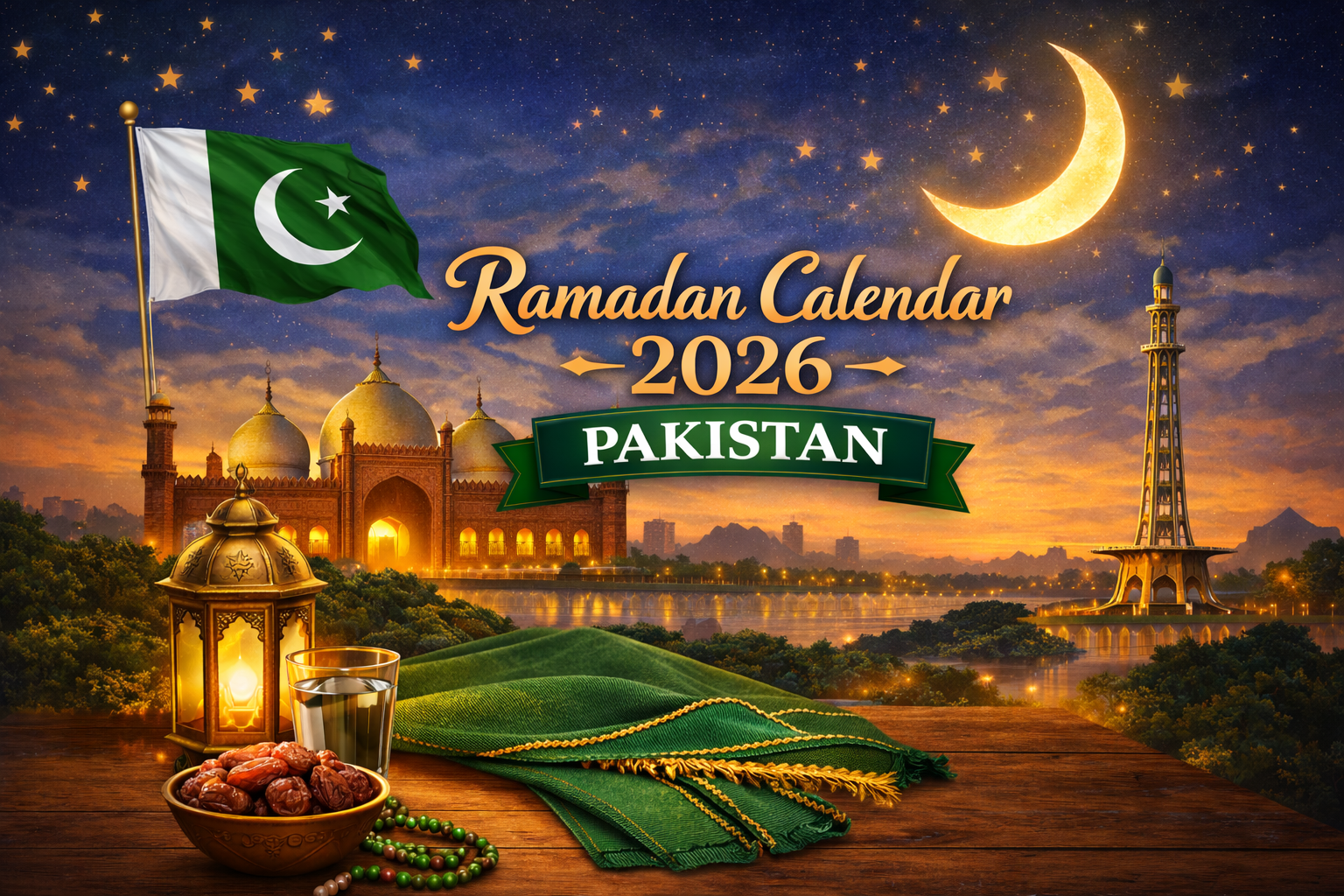
Ramadan 2026 Dates in Pakistan
According to Pakistan's Ruet-e-Hilal Committee, Ramadan 2026 officially commenced after the crescent moon was sighted on the evening of 18 February 2026, making 19 February 2026 the first day of fasting (Roza). The holy month is expected to conclude around 19 March 2026, subject to the moon sighting at the end of Ramadan, after which Eid ul-Fitr will be celebrated across the country.
This year, Ramadan falls during the cooler winter-spring season, offering relatively comfortable fasting conditions compared to summers. Fasting hours vary between approximately 12 to 13 hours across most Pakistani cities.
Sehri & Iftar Timings for Major Cities — Today (21 Feb 2026)
Sehri time in Pakistan corresponds to the Fajr prayer, while Iftar time aligns with the Maghrib prayer at sunset. These timings differ from city to city based on geographical location. Below is today's complete timing table for Pakistan's major urban centres:
Today's Sehri & Iftar Timings — 21 February 2026
| City | Sehri (Fajr) | Iftar (Maghrib) |
|---|---|---|
| Karachi | 05:44 AM | 06:30 PM |
| Lahore | 05:16 AM | 05:55 PM |
| Islamabad | 05:21 AM | 05:58 PM |
| Rawalpindi | 05:22 AM | 05:58 PM |
| Peshawar | 05:28 AM | 06:04 PM |
| Quetta | 05:46 AM | 06:26 PM |
| Multan | 05:28 AM | 06:08 PM |
| Faisalabad | 05:22 AM | 06:00 PM |
| Sialkot | 05:16 AM | 05:54 PM |
| Hyderabad | 05:39 AM | 06:25 PM |
| Sukkur | 05:38 AM | 06:21 PM |
| Gujranwala | 05:17 AM | 05:55 PM |
| Abbottabad | 05:24 AM | 06:01 PM |
| Bahawalpur | 05:32 AM | 06:12 PM |
| Sargodha | 05:22 AM | 06:01 PM |
Timings are approximate and may vary slightly by local mosque announcements. Always follow your local mosque or official authority for confirmation.
Ramadan 2026 Pakistan — Full Timetable Overview
The Ramadan Calendar 2026 is an indispensable reference guide for every Muslim household in Pakistan. With pre-dawn Sehri meals and post-sunset Iftar gatherings forming the rhythm of daily life throughout the blessed month, having a reliable timetable ensures that worshippers can plan their routines, manage work schedules, and fulfil their spiritual obligations with ease.
Timings vary significantly across Pakistan due to its vast geographical expanse — from the southernmost city of Karachi on the Arabian Sea coast to the northern mountain towns of Gilgit-Baltistan. Sehri (pre-dawn meal) times are the same as the Fajr prayer, while Iftar time coincides with the Maghrib prayer at sunset.
City-Wise Ramadan Timetable Across Pakistan
Pakistan is home to hundreds of cities, each with its own unique geographic coordinates that influence prayer times. Among the major urban centres:
- Karachi is the most populous city and the country's commercial hub. As a coastal metropolis, it experiences slightly later Sehri and Iftar times compared to northern cities.
- Lahore in Punjab province sees earlier Sehri times due to its eastern location, making it one of the cities with the earliest Fajr in mainland Pakistan.
- Islamabad & Rawalpindi, being at a higher elevation and in the northern region, have timings close to each other, with sunset coming slightly earlier than in Karachi.
- Peshawar in Khyber Pakhtunkhwa benefits from an earlier sunset due to its more westerly longitude.
- Quetta, capital of Balochistan, records some of the latest Sehri and Iftar times in the country owing to its western geographic position.
- Multan and Faisalabad in central Punjab have timings that fall between the northern and southern extremes.
Importance of Sehri and Iftar — Timings & Traditions
In Islam, the month of Ramadan holds the distinction of being the 9th month of the Islamic (Hijri) lunar calendar. Fasting during this month is one of the Five Pillars of Islam and is obligatory for every adult Muslim who is physically and mentally able to do so. The act of fasting from the first light of dawn (Fajr) until sunset (Maghrib) is a profound act of worship that purifies the soul, instils discipline, and strengthens the bond with Allah (SWT).
Sehri — the pre-dawn meal — is Sunnah (a recommended practice of the Prophet Muhammad ﷺ) and provides nourishment for the day ahead. It should be eaten before the Fajr Azan. Iftar — the breaking of the fast at sunset — is a moment of spiritual joy and gratitude. It is traditional to break the fast with dates and water, following the Sunnah of the Prophet ﷺ, before offering the Maghrib prayer.
Across Pakistan, households gear up well before Ramadan, stocking up on dates, fruits, samosas, pakoras, juices, and traditional foods. Mosques organise large community Iftar gatherings, and the spirit of charity and giving flourishes throughout the month.
Your Ramadan 2026 Goals Checklist
Ramadan is the perfect opportunity to set ambitious spiritual, personal, and social goals. Use this checklist to maximise the blessings of the holy month:
Strengthen Your Connection With Allah
- Offer all five daily prayers on time
- Perform Taraweeh and Tahajjud prayers regularly
- Aim to complete one full recitation of the Quran
Deepen Spiritual Practice
- Recite daily morning and evening Duas
- Dedicate time to Dhikr throughout the day
- Seek forgiveness with Astaghfirullah frequently
Acts of Kindness & Charity
- Give Zakat or Sadaqah to those in need
- Host or contribute to community Iftar arrangements
- Volunteer at a mosque or local food drive
Self-Discipline & Growth
- Avoid idle talk, backbiting, and negative speech
- Reduce screen time and social media usage
- Read Islamic books and articles daily
Mosque Preparations & Taraweeh Arrangements Across Pakistan
Pakistan is home to an estimated 3.5 million mosques, making it one of the most mosque-dense nations on earth. During Ramadan, these houses of worship transform into vibrant centres of community life. Special Taraweeh prayers are held every night after Isha, and mosques organise community Iftar events, Quran recitation competitions, and Islamic lectures.
Among Pakistan's most iconic mosques:
- Faisal Mosque, Islamabad — Pakistan's largest mosque, capable of accommodating over 300,000 worshippers in its courtyard and grounds, hosts special Taraweeh and Laylat al-Qadr programmes.
- Badshahi Mosque, Lahore — A Mughal-era masterpiece that draws thousands of devotees each night for Taraweeh during Ramadan.
- Masjid-e-Tooba, Karachi — Known for its distinctive domed design, it holds large congregational Iftar gatherings.
- Wazir Khan Mosque, Lahore and Masjid Mahabat Khan, Peshawar — Historic mosques that hold special Ramadan ceremonies reflecting centuries of tradition.
The last ten nights of Ramadan — particularly Laylat al-Qadr (the Night of Power, believed to fall on odd nights from 21st to 29th Ramadan) — see unprecedented attendance at mosques nationwide, with millions engaging in night-long worship and prayer.
Eid ul-Fitr 2026 in Pakistan
Following the completion of 29 or 30 fasts, Eid ul-Fitr 2026 is expected to be celebrated on approximately 20 or 21 March 2026, subject to the official moon sighting announcement by the Ruet-e-Hilal Committee. It will be a national public holiday, marked by special Eid prayers, new clothes, family gatherings, and the exchange of Eidi.
Frequently Asked Questions
🌙 Ramadan Mubarak from Admin
Wishing all Pakistani Muslims a blessed, peaceful, and spiritually fulfilling Ramadan. May Allah (SWT) accept your fasts, prayers, and good deeds throughout this holy month.
Connect With Us