'Made in Pakistan' Electric Vehicle Company Launched: Green Energy Revolution Begins
Historic Inauguration Ceremony
On Saturday, Provincial Minister for Energy and Sports Malik Faisal Ayub Khokhar and Member of National Assembly (MNA) Malik Saiful Malook Khokhar jointly inaugurated the "Made in Pakistan" electric and solar-powered vehicle manufacturing company at the SBP e-Library, Nishtar Park Sports Complex. The ceremonial launch marked a pivotal moment in Pakistan's journey toward green energy adoption and technological self-reliance.
The inauguration event drew significant attention from government officials, industry leaders, environmental advocates, and technology enthusiasts, all recognizing the historic significance of Pakistan's entry into domestic electric vehicle manufacturing. The ceremony showcased the company's initial product range, manufacturing capabilities, and ambitious vision for transforming Pakistan's transportation landscape.
Comprehensive Product Portfolio
The newly established company has developed a comprehensive range of electric and solar-powered vehicles designed to address diverse transportation needs across Pakistan's urban and rural landscapes. The manufacturing portfolio encompasses three primary vehicle categories:
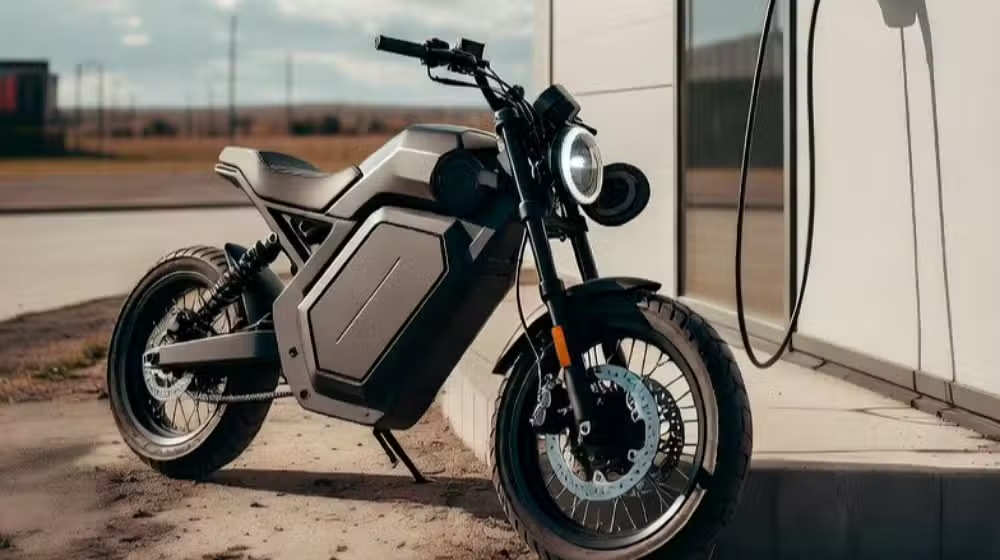
Electric Bikes
The company's electric bike range targets the massive two-wheeler market in Pakistan, where millions of citizens rely on motorcycles for daily commuting. These electric bikes offer:
- Zero Emissions: Completely eliminating tailpipe pollution in urban environments
- Cost-Effective Operation: Significantly lower running costs compared to petrol-powered motorcycles
- Quiet Operation: Reduced noise pollution contributing to improved urban environments
- Low Maintenance: Fewer moving parts reducing maintenance requirements and costs
- Accessible Charging: Ability to charge using standard electrical outlets
Electric Cars
The electric car segment represents the company's entry into the passenger vehicle market, offering sustainable alternatives to conventional automobiles. Features include:
- Modern design aesthetics aligned with contemporary automotive trends
- Advanced battery technology providing practical driving ranges
- Regenerative braking systems maximizing energy efficiency
- Smart connectivity features integrating with digital lifestyles
- Competitive pricing structures making electric vehicles accessible to broader market segments
Electric Buses
The electric bus manufacturing capability addresses Pakistan's urgent need for sustainable public transportation solutions, particularly in major cities facing severe air quality challenges. These vehicles offer:
- High passenger capacity for efficient mass transit operations
- Substantial reduction in urban air pollution
- Lower operational costs for transport companies and municipal authorities
- Quiet operation improving passenger comfort and reducing urban noise
- Potential integration with solar charging infrastructure for maximum sustainability
Major Step Toward Green Energy Adoption
Participants at the inauguration ceremony universally recognized the initiative as a transformative development for Pakistan's environmental future. The launch represents more than just a new manufacturing venture—it symbolizes Pakistan's commitment to addressing climate challenges while pursuing economic development.
Environmental Impact Potential
The widespread adoption of domestically manufactured electric vehicles could dramatically reduce Pakistan's carbon footprint, improve urban air quality, and decrease the nation's dependence on imported petroleum products. This initiative aligns with global sustainability goals while addressing local environmental and economic challenges.
Government Leadership and Vision
Provincial Minister Malik Faisal Ayub Khokhar articulated a compelling vision for Pakistan's sustainable transportation future during his inaugural address. His remarks emphasized the strategic importance of this initiative within the broader context of Pakistan's energy challenges and development priorities.
The launch of Pakistan's first domestically produced electric and solar vehicles represents a crucial effort to address our ongoing energy crisis. This initiative demonstrates that Pakistan possesses the technical capability and entrepreneurial spirit necessary to compete in global green technology markets while solving local challenges.
Provincial Youth Expo Initiative
Beyond celebrating the electric vehicle launch, Minister Khokhar announced plans for a comprehensive provincial youth expo designed to showcase young talent and encourage innovation across multiple sectors. This complementary initiative aims to:
- Create platforms for young entrepreneurs to present innovative solutions
- Connect youth talent with potential investors and mentors
- Foster a culture of innovation and technological advancement
- Identify and support promising start-ups in emerging sectors
- Build networks connecting youth across different technological and business domains
The youth expo concept reflects recognition that sustainable economic growth requires continuous innovation and the active engagement of Pakistan's large youth population in productive, forward-looking enterprises.
Economic Benefits and Job Creation
MNA Malik Saiful Malook emphasized the substantial economic advantages accompanying the electric vehicle manufacturing initiative. His remarks highlighted the potential for widespread job creation and skills development across the province.
This initiative will create numerous employment opportunities for our province's youth while supporting the growth of locally manufactured sustainable transport solutions. We are not just building vehicles—we are building careers, developing technical expertise, and establishing Pakistan's position in the global green technology market.
Employment Opportunities Across Value Chain
The electric vehicle manufacturing ecosystem generates employment across multiple skill levels and functional areas:
- Manufacturing Jobs: Assembly line workers, quality control specialists, and production supervisors
- Engineering Positions: Electrical engineers, mechanical engineers, and software developers
- Research & Development: Battery technology specialists, vehicle design engineers, and testing professionals
- Supply Chain Management: Procurement specialists, logistics coordinators, and inventory managers
- Sales and Marketing: Dealership staff, marketing professionals, and customer service representatives
- After-Sales Service: Maintenance technicians, charging infrastructure specialists, and spare parts personnel
Addressing Pakistan's Energy Crisis
Pakistan has long struggled with energy security challenges, including power generation shortfalls, dependence on imported fossil fuels, and the economic burden of energy subsidies. The electric vehicle initiative contributes to addressing these challenges through multiple mechanisms:
Reduced Petroleum Imports
Transportation represents a major component of Pakistan's petroleum consumption. Transitioning to electric vehicles powered by domestically generated electricity reduces foreign exchange expenditures on imported oil and improves the nation's trade balance.
Efficient Energy Utilization
Electric vehicles offer significantly higher energy efficiency compared to internal combustion engines. This efficiency advantage means that the same energy content produces substantially more transportation output when delivered through electric motors rather than conventional engines.
Integration with Renewable Energy
The solar-powered component of these vehicles aligns perfectly with Pakistan's abundant solar energy potential. By integrating solar technology into the vehicle design and supporting infrastructure, the initiative maximizes the use of renewable resources while minimizing grid dependence.
Technology Development and Innovation
Establishing domestic electric vehicle manufacturing capabilities requires substantial technological expertise and innovation capacity. The new company's success depends on continuous development across multiple technical domains:
Core Technology Areas
- Battery Technology: Development or adaptation of efficient, cost-effective battery systems suitable for Pakistan's climate conditions
- Power Electronics: Motor controllers, charging systems, and energy management platforms
- Solar Integration: Photovoltaic panel integration, hybrid power management, and solar charging optimization
- Vehicle Design: Aerodynamic optimization, lightweight materials, and efficient packaging
- Software Systems: Battery management systems, vehicle control units, and user interface applications
Supporting Infrastructure Requirements
The success of electric vehicle adoption depends critically on developing comprehensive charging infrastructure across Pakistan. This infrastructure development requires coordinated efforts among government, private sector, and utility companies:
- Public Charging Stations: Strategic placement of charging facilities in urban areas, along highways, and at commercial locations
- Home Charging Solutions: Standardized systems enabling vehicle owners to charge at residential locations
- Workplace Charging: Installation of charging facilities at offices and industrial parks
- Fast Charging Networks: High-power charging stations reducing charging times for long-distance travel
- Solar Charging Integration: Combination of solar power generation with charging infrastructure for maximum sustainability
Market Potential and Consumer Adoption
Pakistan's automotive market presents significant opportunities for electric vehicle adoption, driven by several favorable factors:
- High fuel costs motivating consumers to seek alternatives
- Growing environmental awareness particularly among urban populations
- Government policy support through potential tax incentives and subsidies
- Increasing electricity generation capacity making vehicle charging more feasible
- Young, tech-savvy population receptive to innovative transportation solutions
Challenges and Strategic Considerations
While the electric vehicle initiative offers tremendous promise, several challenges must be addressed to ensure long-term success:
Cost Competitiveness
Electric vehicles typically carry higher upfront costs than conventional vehicles, primarily due to battery expenses. Achieving cost parity requires economies of scale, technological improvements, and potentially government support mechanisms to encourage early adoption.
Consumer Education
Many potential customers lack familiarity with electric vehicle technology, maintenance requirements, and operational benefits. Comprehensive consumer education campaigns are essential for building confidence and driving market acceptance.
Quality and Reliability
Establishing reputation for quality and reliability is crucial for long-term market success. Rigorous quality control, comprehensive testing programs, and robust after-sales support systems must be priorities from the outset.
Supply Chain Development
Creating a robust domestic supply chain for components, particularly batteries and electronic systems, presents both challenges and opportunities for developing local manufacturing ecosystems and reducing dependence on imports.
Regional and Global Context
Pakistan's entry into electric vehicle manufacturing occurs within a global context of rapid transformation in the automotive industry. Countries worldwide are transitioning away from fossil fuel-powered transportation, creating both competitive pressures and collaborative opportunities.
Within South Asia, several countries are pursuing electric vehicle strategies, including India's ambitious electrification targets and Bangladesh's growing electric rickshaw market. Pakistan's domestic manufacturing capability positions the nation to participate in regional supply chains and potentially export to neighboring markets.
Policy Framework and Government Support
Maximizing the impact of this initiative requires supportive policy frameworks at both provincial and federal levels. Key policy considerations include:
- Tax incentives for electric vehicle purchases and manufacturing investments
- Reduced customs duties on essential components not yet manufactured locally
- Preferential electricity tariffs for vehicle charging to encourage adoption
- Government procurement preferences for domestically manufactured electric vehicles
- Research and development support through grants and technical assistance programs
- Standards development ensuring safety and interoperability
Future Outlook and Expansion Potential
The successful launch of Pakistan's first electric vehicle manufacturing company creates a foundation for future expansion and diversification. Potential development trajectories include:
- Expansion of production capacity to meet growing demand
- Development of additional vehicle models targeting specific market segments
- Establishment of dealer networks and service centers nationwide
- Export market development targeting regional countries
- Technology partnerships with international electric vehicle manufacturers
- Integration of autonomous driving features and advanced connectivity
- Development of battery manufacturing capabilities within Pakistan
Conclusion
The inauguration of Pakistan's first "Made in Pakistan" electric and solar-powered vehicle company represents a landmark achievement in the nation's industrial and environmental journey. By manufacturing electric bikes, cars, and buses domestically, Pakistan demonstrates its capacity for technological innovation while addressing critical challenges in energy security, environmental sustainability, and economic development.
The initiative's success will depend on sustained commitment from government, continuous technological innovation, development of supporting infrastructure, and growing consumer acceptance. However, the foundation has been laid for transforming Pakistan's transportation sector, creating employment opportunities for youth, reducing environmental impact, and establishing the nation as a participant in the global green technology revolution.
As this pioneering company begins operations, it carries the hopes of a nation seeking sustainable prosperity and environmental responsibility. The vehicles rolling off its production lines represent not just transportation solutions, but symbols of Pakistan's determination to build a cleaner, more efficient, and technologically advanced future for generations to come.
Back to News